This week’s choice is The Naming of Cats by T.S. Eliot, and those friends and family who have cats (or perhaps I should say, those who are on their cat’s staff) will understand. This is chosen for you all.
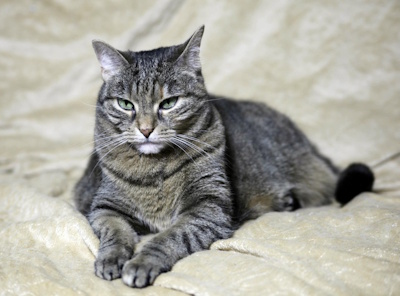
First of all, there’s the name that the family use daily,
T.S. Eliot (1888—1965)
Such as Peter, Augustus, Alonzo, or James,
Such as Victor or Jonathan, George or Bill Bailey—
All of them sensible everyday names.
Poem 415. The Naming of Cats
The Naming of Cats is a difficult matter,
It isn’t just one of your holiday games;
You may think at first I’m as mad as a hatter
When I tell you, a cat must have THREE DIFFERENT NAMES.
First of all, there’s the name that the family use daily,
Such as Peter, Augustus, Alonzo, or James,
Such as Victor or Jonathan, George or Bill Bailey—
All of them sensible everyday names.
There are fancier names if you think they sound sweeter,
Some for the gentlemen, some for the dames:
Such as Plato, Admetus, Electra, Demeter—
But all of them sensible everyday names,
But I tell you, a cat needs a name that’s particular,
A name that’s peculiar, and more dignified,
Else how can he keep up his tail perpendicular,
Or spread out his whiskers, or cherish his pride?
Of names of this kind, I can give you a quorum,
Such as Munkustrap, Quaxo, or Coricopat,
Such as Bombalurina, or else Jellylorum—
Names that never belong to more than one cat.
But above and beyond there’s still one name left over,
And that is the name that you never will guess;
The name that no human research can discover—
But THE CAT HIMSELF KNOWS, and will never confess.
When you notice a cat in profound meditation,
The reason, I tell you, is always the same:
His mind is engaged in a rapt contemplation
Of the thought, of the thought, of the thought of his name:
His ineffable effable
Effanineffable
Deep and inscrutable singular name.
This is the opening poem in Eliot’s Old Possum’s Book of Practical Cats and introduces the idea of cats as anthropomorphic creatures with human propensities—an idea that will be entirely familiar to anyone who has (or tends to) a cat or cats.
Eliot begins his sequence of feline poems by introducing the idea that cats, being out of the ordinary, don’t just have a familiar name by which their family address them. They have also an individual name and a personal name.
He lists first the family names by which they might be known—base, common and popular as Ancient Pistol might say: “Peter, Augustus, Alonzo or James” for example, or for the more high-brow, “Plato, Admetus, Electra, Demeter” but, Eliot asserts, “all of them sensible everyday names”
Eliot goes on to say that each cat requires a specific and unique name that speaks to their character and is an important part of their self-image: “Munkustrap, Quaxo, or Coricopat” are suitable examples given by Eliot and I can’t help but feel that they were on his short-list for the cats which are the subject of his other poems in the book: Skimbleshanks, Griddlebone, Growltiger, Macavity, and so on.
The third name is beyond even that, and nobody but the cat knows it—it is, however, the reason for that thousand-mile stare you may catch on their faces from time to time: they are deep in thought about this “ineffable effable/Effanineffable/Deep and inscrutable singular name”.
Possibly naming a pet and naming a baby are alike—the process involves careful consideration as nobody wants to be calling their child’s or pet’s name along the street or across the park if it’s going to be liable to ridicule: children, of course, need considerably more thought since other people’s pets aren’t going to care what yours is called.
P.G. Wodehouse memorably underlined this point:
“…And he shrinks, no doubt, from the prospect of being addressed for the remainder of his life as Sir Lemuel.”
“His name’s not Lemuel?”
“I fear so, sir.”
“Couldn’t he use his second name?”
“His second name is Gengulphus.”
“Golly, Jeeves,” I said, thinking of old Uncle Tom Portarlington, “there’s some raw work pulled at the font from time to time, is there not?”
“There is indeed, sir.”
Jeeves and the Feudal Spirit by P.G. Wodehouse
I remember naming our pets with the help of David and Tom: our first hamster was called Tulips, I seem to recall, since his cage was christened Hamsterdam; the second was Smokey and the third, who was climbing all over his cell mate when we discovered in a pet shop in Rugeley, could only be christened Basil. He was as lively a character as his namesake in Fawlty Towers; when he died we got Lucy the rabbit and then Hamish and Dougal, named for the two faux Scottish characters created by Barry Cryer and Graeme Garden for I’m Sorry I Haven’t a Clue, much to Tom’s disapproval. It wasn’t long before we had seven rabbits and it emerged that we should have named Hamish Amy, which returns us to the thorny question of choosing names.
I like this poem because it exhibits Eliot’s playful nature (which contrasts with his more serious works) and his genius for inventing cat names.
There are several performances of the poem on YouTube including the opening from the musical Cats where the cast recite the whole poem, but my choice has to be Eliot himself reading the poem.